Birthstone
Bloodstone
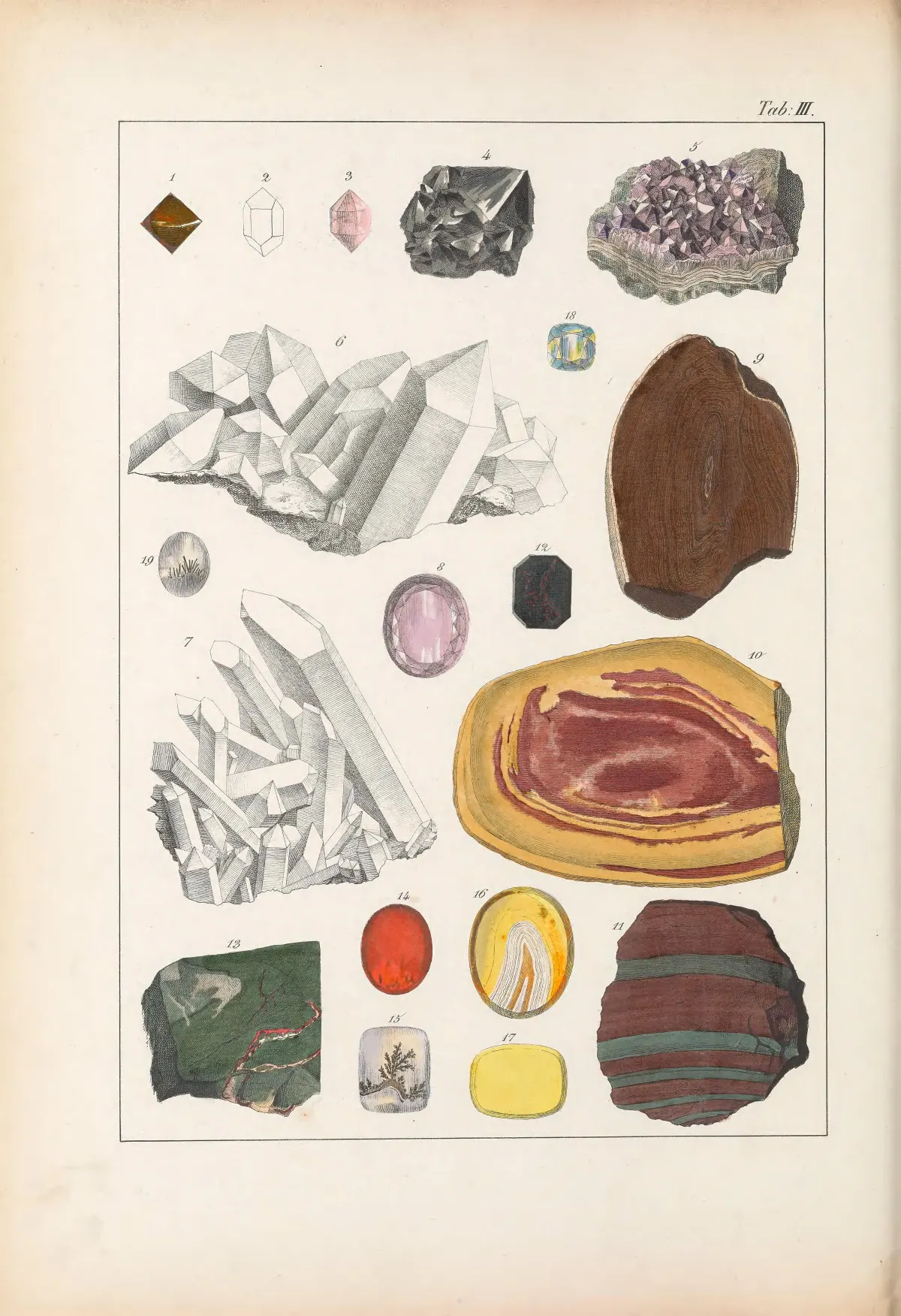
Usually described as dark green flecked with red.
- Colour
- dark green flecked with red
- Month
- March
- Status
- 1912 and todayOn the list adopted in 1912, as a birth-stone, and still on today's. The two lists compared.
Name and history
The English name is plain description, blood and stone, because the red spots in it look like drops of blood. Its other name, heliotrope, is from the Greek helios, sun, and trepein, to turn, after old ideas about the way the stone plays with light. A Christian tradition holds that the red spots come from blood that fell on the stone at the crucifixion.
What it actually is
| Species | Quartz (cryptocrystalline — chalcedony with red jasper) |
|---|---|
| Composition | SiO₂ |
| Crystal system | trigonal |
| Hardness | 6.5–7 on the Mohs scale. About as hard as the quartz in household dust. |
| Cleavage | none; conchoidal to splintery fracture |
| What makes the colour | not a trace element but inclusions — the green body colour comes from finely dispersed iron silicate inclusions (chlorite or amphibole) in the chalcedony, and the blood-red spots are iron oxide (hematite) in red jasper |
| Mined in | India, Brazil, Australia, Madagascar, United States |
Hardness, composition and crystal system are standard mineralogical values. Where published sources disagree, the range given covers them.
How it gets damaged
Tough, uncleavable and well suited to carving, but it will scratch against quartz dust and harder stones, and prolonged heat can alter the iron oxides; solvents are a risk only if the stone has been dyed or waxed.
This describes the physical stone. Nothing on this site claims a gemstone has any therapeutic or healing effect — see the disclaimer.
Which list it is on
| Month | The 1912 list | Today's list |
|---|---|---|
| March | Birth-stone | Yes |