The month

Born in March

Written . By the BirthAlmanac team.

Star signs
Pisces, then AriesThe sun moves into Aries on the 20th or 21st.
Birthstones
Aquamarine and bloodstoneThe 1912 list put bloodstone first.
Birth flower
DaffodilThe daffodil for new beginnings, as usually given today.
Days
31Days 60 to 90 of a common year, 61 to 91 of a leap year.

Where the name comes from

March is named after Mars, the Roman god of war, and it was the month in which the campaigning season began. It was the first month of the oldest Roman calendar, which is why September, October, November and December still carry the Latin numbers seven to ten: counted from March, that is exactly where they fall. The old start of the year lingered for a long time in another form, because 25 March, Lady Day, was the legal New Year's Day in England until 1752.

The season, north and south

Between 1920 and 2026 the March equinox fell on the 20th or 21st in universal time, and on the 20th in every year since 2008. It is the moment the sun crosses the equator heading north, when day and night are close to equal everywhere on earth: the start of spring by the astronomers' reckoning in the north and of autumn in the south. A March birthday sits on that hinge, and the lambs and daffodils of a northern March and the first cool evenings of a southern one are the same week.

The star signs of March

A March birthday begins as Pisces. Between 1920 and 2026 the sun moved into Aries, at the March equinox, on the 20th of March in 65 years and the 21st in 42 (the last in 2007), in universal time. A birthday on 20 March or 21 March is therefore Pisces or Aries depending on the year, and in the year of a crossing on the hour; the page for each of those dates gives the sign and the moment of the crossing for every year.

Every other date in March had one sign all day in every one of those years: Pisces up to the 19th and Aries from the 22nd. Those are dates in universal time, though, and a date begins earlier east of Greenwich and later to the west of it, so in some years the 19th and 22nd were also the local date of a crossing somewhere far enough away; their pages list the years.

In the astrological tradition Pisces is a water sign and a mutable one, ruled by Jupiter, and by Neptune in modern astrology. Printed tables give it as 19 February – 20 March; between 1920 and 2026 the sun entered it on the 18th or 19th of February and left it on the 20th or 21st of March.

In the astrological tradition Aries is a fire sign and a cardinal one, ruled by Mars. Printed tables give it as 21 March – 19 April; between 1920 and 2026 the sun entered it on the 20th or 21st of March and left it on the 19th, 20th or 21st of April.

Every date in March. The marked dates are the ones on which the sun changed sign in at least one year since 1920.

March's birthstones

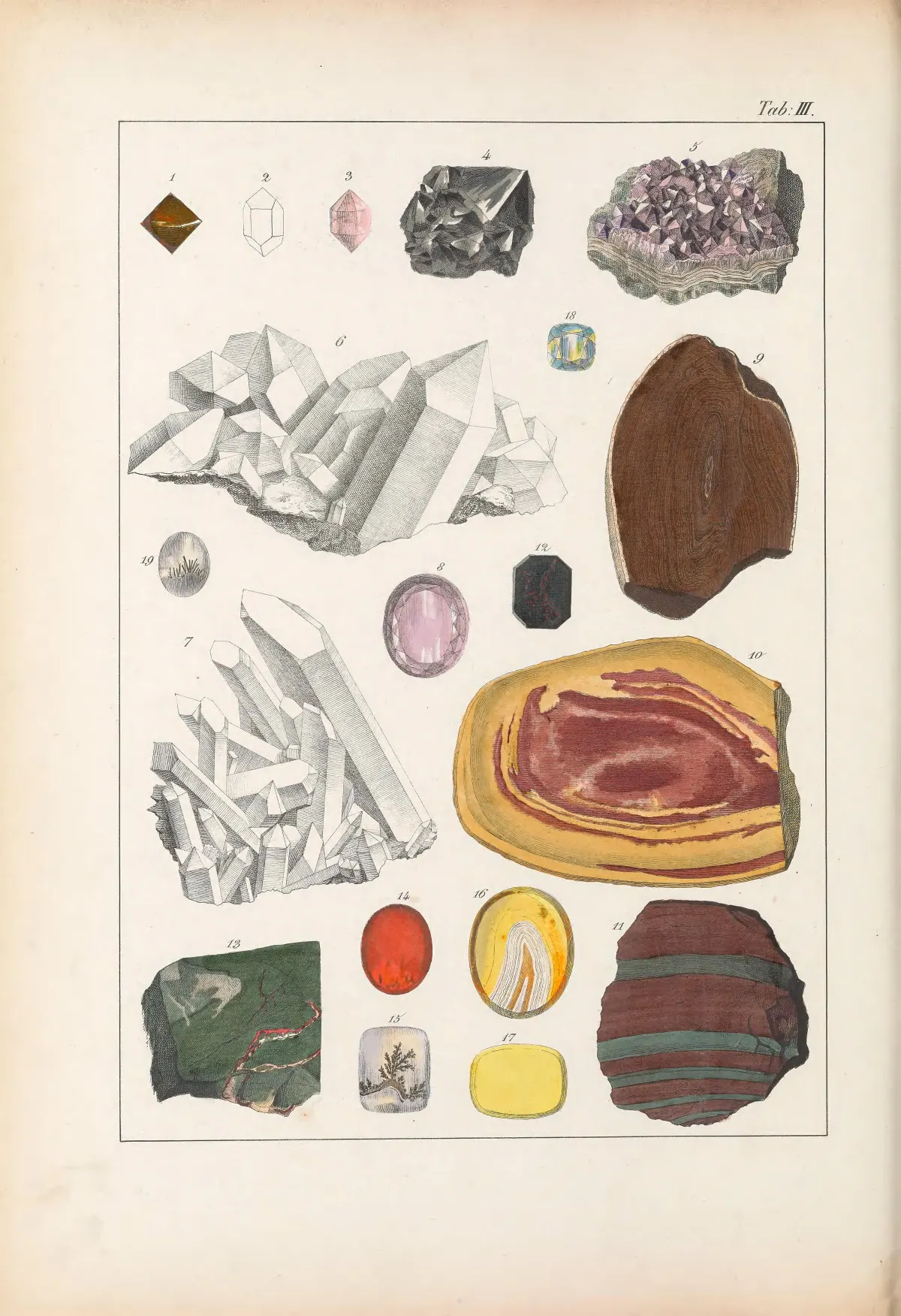
March has had the same two stones since 1912; what has changed is which comes first. The list drawn up that year made bloodstone the birth-stone and aquamarine its alternate, and the revision of 1952 turned them round, so aquamarine is the one printed first today. Aquamarine is beryl, the same mineral as emerald, coloured the blue of its Latin name, sea water, by iron. Bloodstone is dark green chalcedony spotted with red iron oxide, and a Christian legend holds that the spots are drops of Christ's blood that fell on green stone at the Crucifixion. The two are about as different as stones can be, which makes March the clearest case of why the question “what is my birthstone” can have two honest answers.

Stone1912 listToday's listChange
AquamarineAlternateYes—
BloodstoneBirth-stoneYes—

The 1912 list is the one the National Association of Jewelers adopted at Kansas City that August, as G. F. Kunz printed it in The Curious Lore of Precious Stones (1913), with a birth-stone for each month and an alternate for some; today's list is the one GIA publishes. The two lists compared →
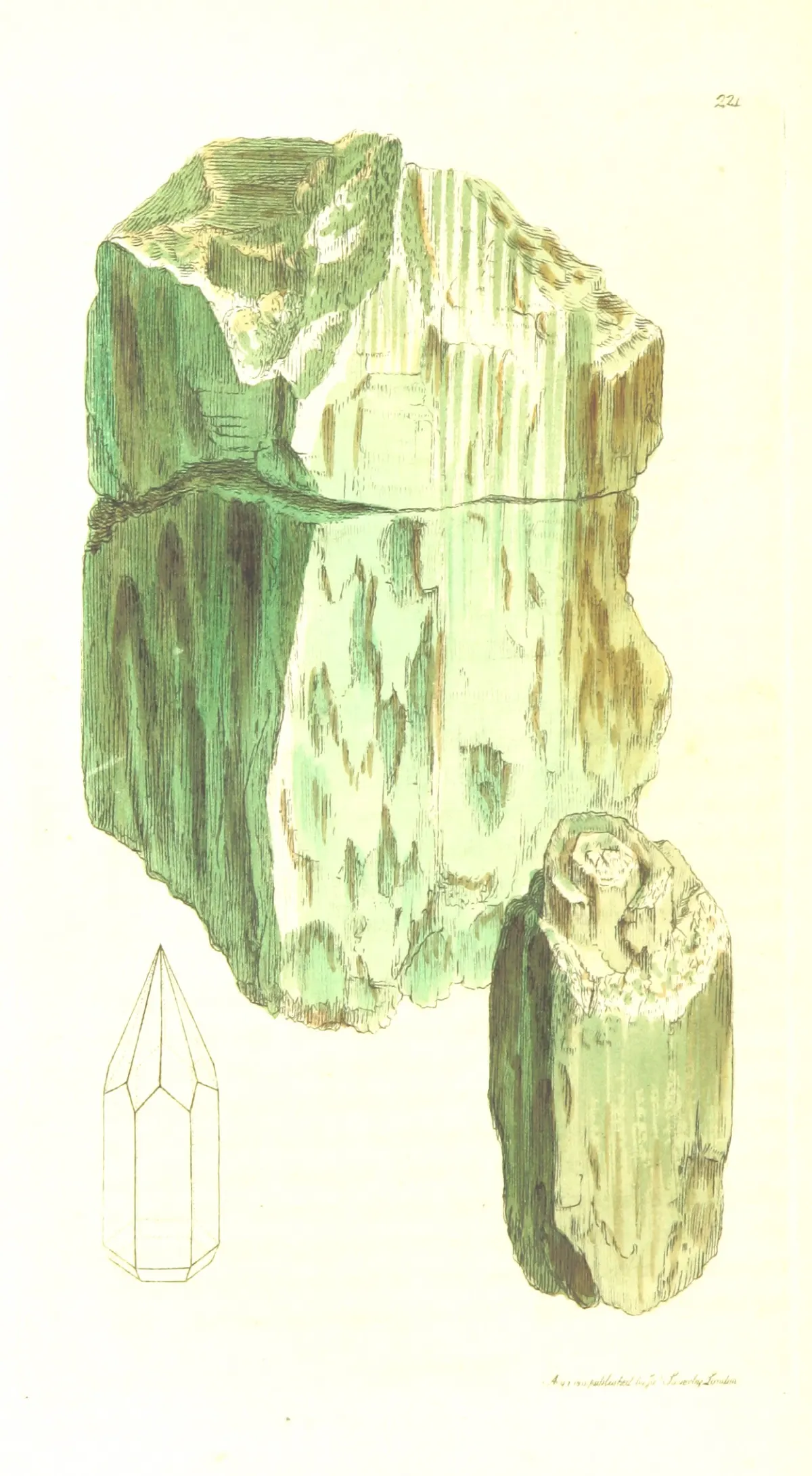
A hand-coloured plate of a large broken beryl crystal, its vertical faces finely striated and shading from sea-green through milky white to buff, with a smaller weathered prism beside it and an outline diagram of the six-sided crystal below.
Silex smaragdus, Beryl · James Sowerby · British Mineralogy, or, Coloured Figures intended to elucidate the Mineralogy of Great Britain, Volume 5, 1817
A hand-coloured lithograph of quartz varieties. At lower left a polished slab of heliotrope, dark green threaded with blood-red veins; nearby a small dark green octagonal bloodstone spotted with red, among rock-crystal groups, an amethyst druse, jaspers and agates.
Quartz: Heliotrope, or Blood-stone · Johann Gottlob von Kurr, figures 12 and 13 · The Mineral Kingdom (English edition of Das Mineralreich in Bildern), Plate III, 1859

March's birth flower

The daffodil is March's flower and the national flower of Wales, and its name has wandered. It began as a variant of affodill, the asphodel, a different plant altogether, and was first used for the yellow narcissus in the 1590s; the d at the front may be the Dutch article, fused on by a trade that bought its bulbs from the Netherlands. The daffodil is also a crop. Galanthamine, a drug used to treat the symptoms of mild to moderate Alzheimer's disease, is extracted from the bulbs on an industrial scale. Other alkaloids, lycorine above all, make the plant poisonous to cats and dogs, and the bulb most of all.

FlowerUsually given todayIn a nineteenth-century dictionary
DaffodilNew beginnings“Regard”Kate Greenaway, Language of Flowers, 1884

The meanings usually given today are a summary of the birth-flower lists printed now. The older ones are quoted from the dictionary named, under the heading it prints them. Birth flowers and the language of flowers →
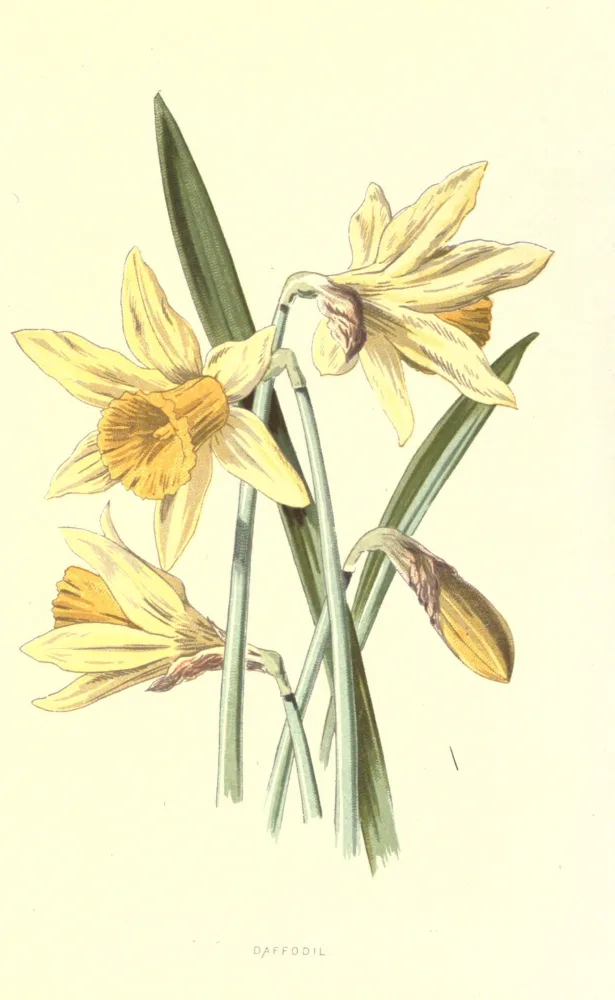
A botanical plate labelled Daffodil, showing three wild daffodil flowers with a long trumpet-shaped orange corona surrounded by pale yellow petals, on upright stems with narrow strap-shaped grey-green leaves, plus one unopened papery bud.
Narcissus pseudonarcissus · F. Edward Hulme · Familiar Wild Flowers, 1878

Dates to know in March

St David's Day on the 1st is the Welsh national day, when daffodils and leeks are worn, and St Patrick's Day on the 17th the Irish one, now kept far beyond Ireland. International Women's Day falls on the 8th. In South Africa, Human Rights Day on the 21st marks the Sharpeville killings of 1960, when police fired on a crowd protesting against the pass laws and killed 69 people. Easter, which moves with the moon, can fall as early as 22 March, though it last did so in 1818 and will not again until 2285.

Which weekday it falls on

The 1st of March is a Sunday in 2026 and a Monday in 2027, then jumps two days to a Wednesday in 2028, because 29 February 2028 comes between: a date moves on one day of the week a year, and two across a leap day.

March always starts on the same day of the week as November, and in a common year February does too. Between 1920 and 2026 the 13th of March fell on a Friday in 16 years, most recently in 2026, and it next does in 2037.

March, day by day

DateBorn on the day
1 March
  • Frédéric Chopin (1810–1849), Polish composer and pianist
  • Justin Bieber (1994–), Canadian singer-songwriter
  • Yitzhak Rabin (1922–1995), Israeli politician, statesman and general
2 March
  • Mikhail Gorbachev (1931–2022), leader of the Soviet Union from 1985 to 1991
  • Pope Pius XII (1876–1958), pope of the Catholic Church from 1939 to 1958
  • Pope Leo XIII (1810–1903), Pope of the Catholic Church from 1878 to 1903
3 March
  • Alexander Graham Bell (1847–1922), Scottish-born inventor and scientist, credited with patenting the first practical telephone
  • Georg Cantor (1845–1918), German mathematician, inventor of set theory
  • Jessica Biel (1982–), American actress
4 March
  • Antonio Vivaldi (1678–1741), Italian composer and violinist
  • Miriam Makeba (1932–2008), South African singer and civil rights activist
  • Khaled Hosseini (1965–), Afghan novelist
5 March
  • Rosa Luxemburg (1871–1919), Polish-German Marxist revolutionary
  • George Frideric Handel (1685–1759), German-British Baroque composer; born 5 March in the Gregorian calendar, 23 February in the Julian
  • Zhou Enlai (1898–1976), 1st Premier of the People's Republic of China
6 March
  • Michelangelo (1475–1564), Italian artist and architect
  • Gabriel García Márquez (1927–2014), Colombian writer and Nobel laureate
  • Valentina Tereshkova (1937–), Russian cosmonaut and pilot, first woman to have flown in space
7 March
  • Alessandro Manzoni (1785–1873), Italian writer and poet
  • Maurice Ravel (1875–1937), French composer
  • Tomáš Masaryk (1850–1937), Czechoslovak politician, statesman, sociologist and philosopher; first Czechoslovak president
8 March
  • Otto Hahn (1879–1968), German chemist and physicist
  • Carl Philipp Emanuel Bach (1714–1788), German composer
  • Petra Kvitová (1990–), Czech tennis player
9 March
  • Yuri Gagarin (1934–1968), Soviet pilot and cosmonaut, first human in space
  • Taras Shevchenko (1814–1861), Ukrainian poet and artist
  • Bobby Fischer (1943–2008), American chess player
10 March
  • Osama bin Laden (1957–2011), founder of al-Qaeda
  • Chuck Norris (1940–2026), American martial artist and action actor
  • Alexander III of Russia (1845–1894), Emperor of Russia from 1881 to 1894
11 March
  • Douglas Adams (1952–2001), British science fiction writer and humorist
  • Torquato Tasso (1544–1595), Italian poet
  • Harold Wilson (1916–1995), Prime Minister of the United Kingdom from 1964-1970 and 1974-1976
12 March
  • George Berkeley (1685–1753), Irish idealist philosopher and Anglican bishop
  • Gabriele D'Annunzio (1863–1938), Italian writer, poet, playwright, soldier and politician
  • Mitt Romney (1947–), American politician and businessman
13 March
  • Giorgos Seferis (1900–1971), Greek poet and diplomat
  • Joseph II, Holy Roman Emperor (1741–1790), Holy Roman Emperor from 1765 to 1790
  • Pope Innocent XII (1615–1700), pope of the Catholic Church from 1691 to 1700
14 March
  • Albert Einstein (1879–1955), German-born theoretical physicist
  • Michael Caine (1933–), English actor
  • Aamir Khan (1965–), Indian actor
15 March
  • Andrew Jackson (1767–1845), president of the United States from 1829 to 1837
  • Paul Heyse (1830–1914), German writer
  • Alia Bhatt (1993–), British actress who works in Hindi films
16 March
  • James Madison (1751–1836), President of the United States from 1809 to 1817
  • Richard Stallman (1953–), American software freedom activist, short story writer and computer programmer, founder of the GNU project
  • Sully Prudhomme (1839–1907), French poet, winner of the 1901 Nobel Prize in Literature
17 March
  • Harun al-Rashid (763–809), 5th Abbasid caliph (r. 786–809); his birth is dated 17 March 763 or February 766
  • Sheikh Mujibur Rahman (1920–1975), President of the Provisional Government of Bangladesh and the 2nd Prime Minister and first President of Bangladesh
  • Toyotomi Hideyoshi (1537–1598), Japanese samurai and daimyo
18 March
  • Grover Cleveland (1837–1908), President of the United States from 1885 to 1889 and 1893 to 1897
  • Neville Chamberlain (1869–1940), Prime Minister of the United Kingdom from 1937 to 1940
  • Rudolf Diesel (1858–1913), German inventor and mechanical engineer
19 March
  • David Livingstone (1813–1873), Scottish missionary and explorer
  • Adolf Eichmann (1906–1962), German-Austrian SS officer and one of the major organizers of the Holocaust
  • Mario Monti (1943–), Italian economist and politician
20 MarchPisces or Aries
  • Ovid (43 BC–17 AD), Roman poet
  • Henrik Ibsen (1828–1906), Norwegian playwright and theatre director
  • Chester Bennington (1976–2017), American singer, songwriter and musician
21 MarchPisces or Aries
  • Johann Sebastian Bach (1685–1750), German composer; born 21 March in the Julian calendar then used in Eisenach, which is 31 March in the Gregorian
  • Jair Bolsonaro (1955–), 38th President of the Federative Republic of Brazil (2019–2023)
  • Joseph Fourier (1768–1830), French mathematician and physicist
22 March
  • Robert Millikan (1868–1953), American physicist
  • Reese Witherspoon (1976–), American actress
  • Wilhelm I (1797–1888), 19th-century German Emperor and King of Prussia
23 March
  • Akira Kurosawa (1910–1998), Japanese filmmaker
  • Pierre-Simon Laplace (1749–1827), French mathematician and astronomer
  • Wernher von Braun (1912–1977), German and later American aerospace engineer and space architect
24 March
  • Rafael Orozco Maestre (1954–1992), Colombian singer
  • Dario Fo (1926–2016), Italian actor, playwright, comedian, singer-songwriter, theater director, painter, and political activist
  • Harry Houdini (1874–1926), Hungarian-born American illusionist, escapologist, and stunt performer
25 March
  • Elton John (1947–), British singer, songwriter and musician
  • Aretha Franklin (1942–2018), American singer, songwriter, and pianist
  • Béla Bartók (1881–1945), Hungarian composer and pianist
26 March
  • Richard Dawkins (1941–), English ethologist, evolutionary biologist and author
  • Robert Frost (1874–1963), American poet
  • Nancy Pelosi (1940–), American politician
27 March
  • Wilhelm Röntgen (1845–1923), German physicist
  • Mariah Carey (1969–), American singer
  • Quentin Tarantino (1963–), American filmmaker and actor
28 March
  • Lady Gaga (1986–), American singer-songwriter and actress
  • Maxim Gorky (1868–1936), Russian and Soviet writer
  • Mario Vargas Llosa (1936–2025), Peruvian, Spanish and Dominican novelist and writer
29 March
  • John Tyler (1790–1862), president of the United States from 1841 to 1845
  • John Major (1943–), Prime Minister of the United Kingdom from 1990 to 1997
  • Lavrentiy Beria (1899–1953), Soviet politician and NKVD police chief
30 March
  • Vincent van Gogh (1853–1890), Dutch painter
  • Francisco Goya (1746–1828), Spanish painter and printmaker
  • Celine Dion (1968–), French Canadian singer
31 March
  • Johann Sebastian Bach (1685–1750), German composer; 31 March is his birthday in the Gregorian calendar, 21 March in the Julian calendar then used in Eisenach
  • René Descartes (1596–1650), French philosopher, mathematician, and scientist
  • Joseph Haydn (1732–1809), Austrian composer

Three people for each date, from English Wikipedia's list of births for the day, chosen by how many Wikipedia and other Wikimedia projects have a page about them; each date's page lists more. Names are the titles of the English Wikipedia articles; years and descriptions are from Wikidata (CC0), checked and corrected by hand where they needed it. Ask for a removal.

Read on