Birthstone
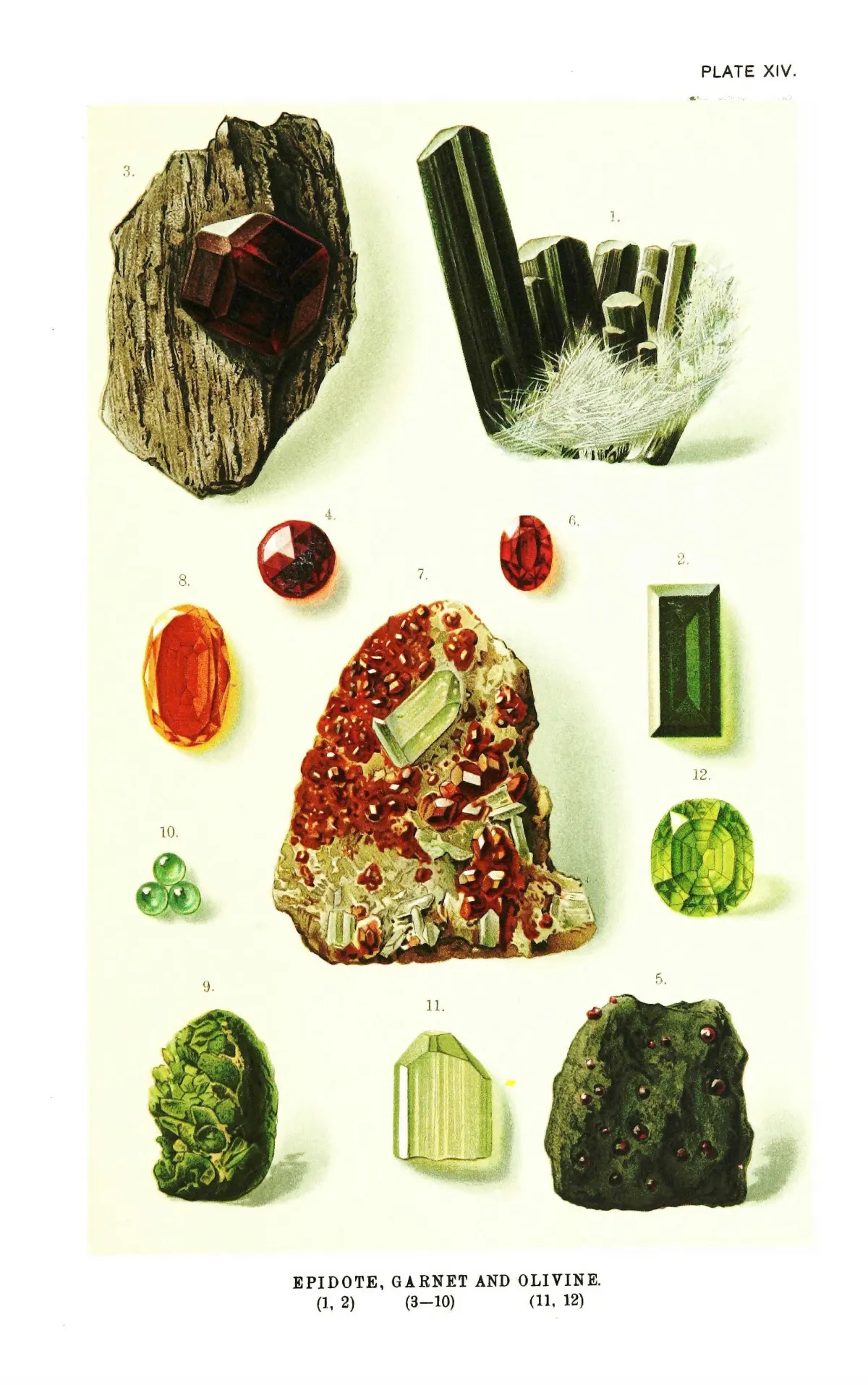
Peridot
Usually described as olive green.
- Colour
- olive green
- Month
- August
- Status
- 1912 and todayOn the list adopted in 1912, as an alternate stone, and still on today's. The two lists compared.
Name and history
The name comes from Old French peridot, also spelt peritot, and the Medieval Latin peridotus, and where those words came from is unknown. In the ancient world the stone was called topazios and was mined on St John's Island, now Zabargad, in the Red Sea, from about 300 BC; the name topaz passed to the mineral that carries it now only in 1737. Some peridot has also reached Earth in meteorites, though that is extremely rare.
What it actually is
| Species | Olivine (forsterite–fayalite series) |
|---|---|
| Composition | (Mg,Fe)₂SiO₄ |
| Crystal system | orthorhombic |
| Hardness | 6.5–7 on the Mohs scale. About as hard as the quartz in household dust. |
| Cleavage | poor to imperfect in two directions; conchoidal fracture |
| What makes the colour | iron — ferrous iron (Fe²⁺) is an essential component of the mineral rather than a trace impurity, which is why peridot is only ever green; roughly 12–15% iron gives the best colour and more turns it muddy and brown |
| Mined in | China, Pakistan, Myanmar, United States, Vietnam |
Hardness, composition and crystal system are standard mineralogical values. Where published sources disagree, the range given covers them.
How it gets damaged
Softer than quartz and notably sensitive to acids, including the acids in perspiration, which etch the polish over time; it fractures readily under thermal shock, so ultrasonic and steam cleaning should be avoided.
This describes the physical stone. Nothing on this site claims a gemstone has any therapeutic or healing effect — see the disclaimer.
Which list it is on
| Month | The 1912 list | Today's list |
|---|---|---|
| August | Alternate | Yes |