Major arcana
The Emperor
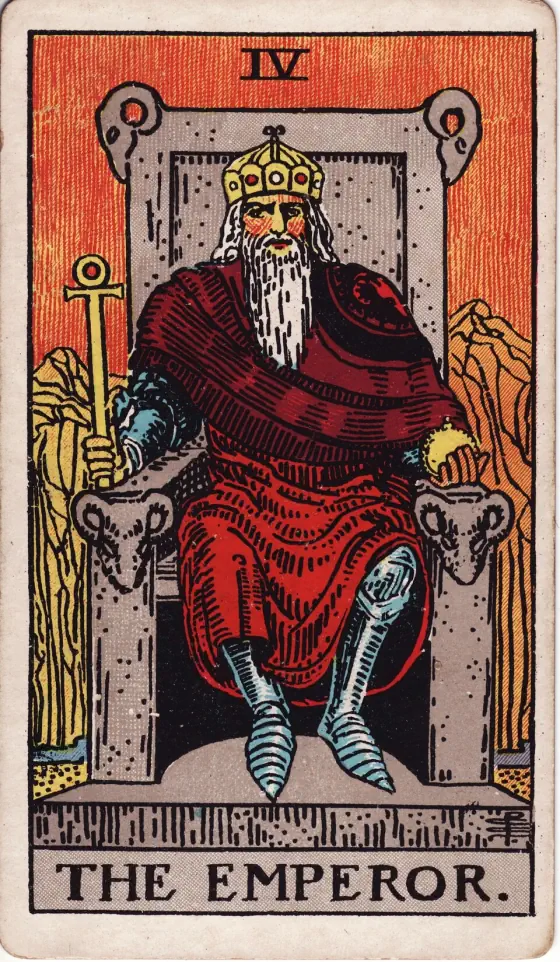
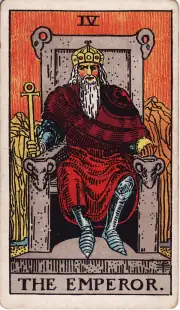
Trump IV of the twenty-two. Drawn by Pamela Colman Smith for the deck first published in London in December 1909.
Waite on its symbolism
He has a form of the Crux ansata for his sceptre and a globe in his left hand. He is a crowned monarch—commanding, stately, seated on a throne, the arms of which are fronted by rams' heads. He is executive and realization, the power of this world, here clothed with the highest of its natural attributes. He is occasionally represented as seated on a cubic stone, which, however, confuses some of the issues. He is the virile power, to which the Empress responds, and in this sense is he who seeks to remove the Veil of Isis; yet she remains virgo intacta.
It should be understood that this card and that of the Empress do not precisely represent the condition of married life, though this state is implied. On the surface, as I have indicated, they stand for mundane royalty, uplifted on the seats of the mighty; but above this there is the suggestion of another presence. They signify also—and the male figure especially—the higher kingship, occupying the intellectual throne. Hereof is the lordship of thought rather than of the animal world. Both personalities, after their own manner, are "full of strange experience," but theirs is not consciously the wisdom which draws from a higher world. The Emperor has been described as (a) will in its embodied form, but this is only one of its applications, and (b) as an expression of virtualities contained in the Absolute Being—but this is fantasy.
A. E. Waite, The Pictorial Key to the Tarot, 1911, Part II, § 2: his whole entry for the card, as printed.
What Waite says it means
These are the divinatory meanings printed in 1911, quoted as he wrote them. They are reported here as what one named book says, not as a claim that a card means anything or predicts anything.
- Upright
- Stability, power, protection, realization; a great person; aid, reason, conviction; also authority and will.
- Reversed
- Benevolence, compassion, credit; also confusion to enemies, obstruction, immaturity.
A. E. Waite, The Pictorial Key to the Tarot, London, 1911, Part III, § 3. Out of copyright.
Where it sits in the trumps
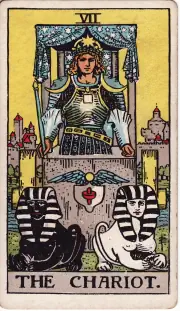
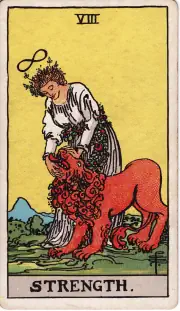
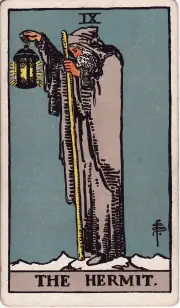
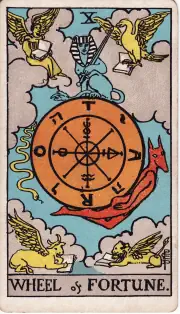
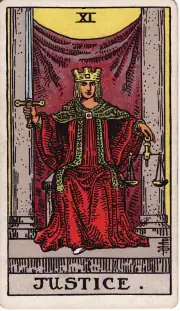
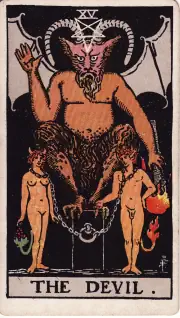
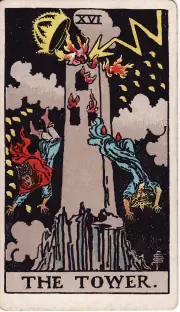
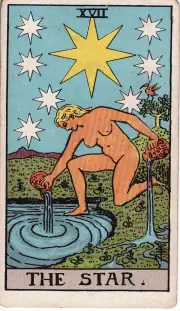
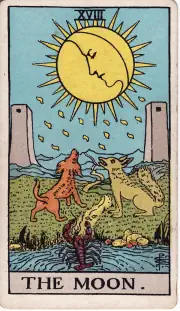
The twenty-two trumps run from The Fool, numbered zero, to The World at twenty-one. Waite moved Strength to eight and Justice to eleven, swapping the order older decks use, so a Marseille deck numbers those two the other way round.
A birth date can be reduced to one of these twenty-two. How the birth card is worked out →
The twenty-two trumps
Read on
Card face: Pamela Colman Smith, from the first printing published by William Rider & Son. Public domain. Source file. Full list on the credits page.
