Day of the week
Monday
“Monday's child is fair of face.”
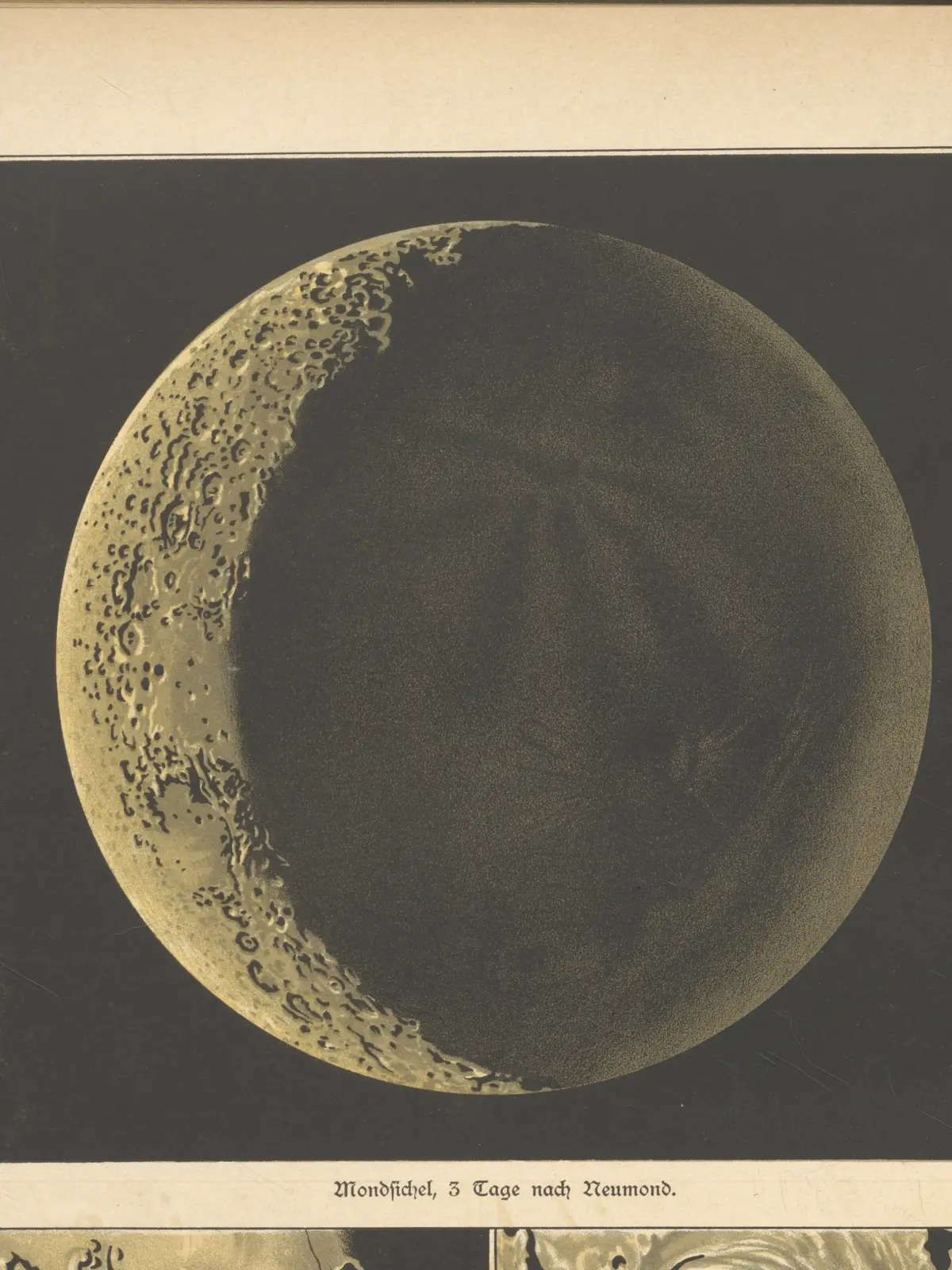
Named for the Moon: dies Lunae.
The line above is Monday's from “Monday's Child” as it is usually printed today, as given in Iona and Peter Opie, The Oxford Dictionary of Nursery Rhymes (1951).
The rhyme was first printed by A. E. Bray in A Description of the Part of Devonshire Bordering on the Tamar and the Tavy (1836), and is older than that in speech. Her line for Monday reads: “Monday's child is fair in face,”
This is folklore recorded from oral tradition, not a claim about anyone born on a Monday.
Where the name comes from
The Old English name was mōnandæg, which contracted to mōndæg: literally the day of the moon. Like the matching names in the other Germanic languages, it is a loan-translation of the Late Latin Lunæ dies, the moon's day, so the English name keeps the Roman planet and says it in English. Tuesday to Friday went the other way and put Germanic gods where the Roman ones had been, and Saturday alone kept the Roman name as it was. It is a common Germanic name: Old Norse had manandagr and Old Frisian monendei, and Dutch and German say maandag and Montag.
Word history from the Online Etymology Dictionary's entry for Monday.
Which dates are a Monday in 2026
52 dates fall on a Monday in 2026.