The month
Born in February
Written . By the BirthAlmanac team.
- Star signs
- Aquarius, then PiscesThe sun moves into Pisces on the 18th or 19th.
- Birthstone
- AmethystThe same as on the 1912 list.
- Birth flowers
- Violet and primroseThe violet for faithfulness, the primrose for young love, as usually given today.
- Days
- 28 or 29Days 32 to 59 of the year, and the 29th is day 60 in a leap year.
Where the name comes from
February is named after the februa, the Roman rites of purification held in the middle of the month. It was the last month of the early Roman year, which began in March, so the cleansing came as the old year closed, and it stayed at the end of the calendar until about 450 BC, when it was moved to second place. By Roman tradition it and January were the two months King Numa added to a calendar that had run to only ten, and it has been the short month ever since: 28 days, and 29 in a leap year.
The season, north and south
In the north February is late winter, and often colder in practice than December even though the days have been lengthening for weeks. In the south it is late summer. In Cape Town it is among the hottest and driest months of the year, and the fire season on the mountain, while on the Highveld the afternoon thunderstorms are still coming in, though past their peak.
The star signs of February
A February birthday begins as Aquarius. Between 1920 and 2026 the sun moved into Pisces on the 18th of February in 35 years (the first in 1949) and the 19th in 72, in universal time. A birthday on 18 February or 19 February is therefore Aquarius or Pisces depending on the year, and in the year of a crossing on the hour; the page for each of those dates gives the sign and the moment of the crossing for every year.
Every other date in February had one sign all day in every one of those years: Aquarius up to the 17th and Pisces from the 20th. Those are dates in universal time, though, and a date begins earlier east of Greenwich and later to the west of it, so in some years the 17th and 20th were also the local date of a crossing somewhere far enough away; their pages list the years.
In the astrological tradition Aquarius is an air sign and a fixed one, ruled by Saturn, and by Uranus in modern astrology. Printed tables give it as 20 January – 18 February; between 1920 and 2026 the sun entered it on the 19th, 20th or 21st of January and left it on the 18th or 19th of February.
In the astrological tradition Pisces is a water sign and a mutable one, ruled by Jupiter, and by Neptune in modern astrology. Printed tables give it as 19 February – 20 March; between 1920 and 2026 the sun entered it on the 18th or 19th of February and left it on the 20th or 21st of March.
February's birthstone
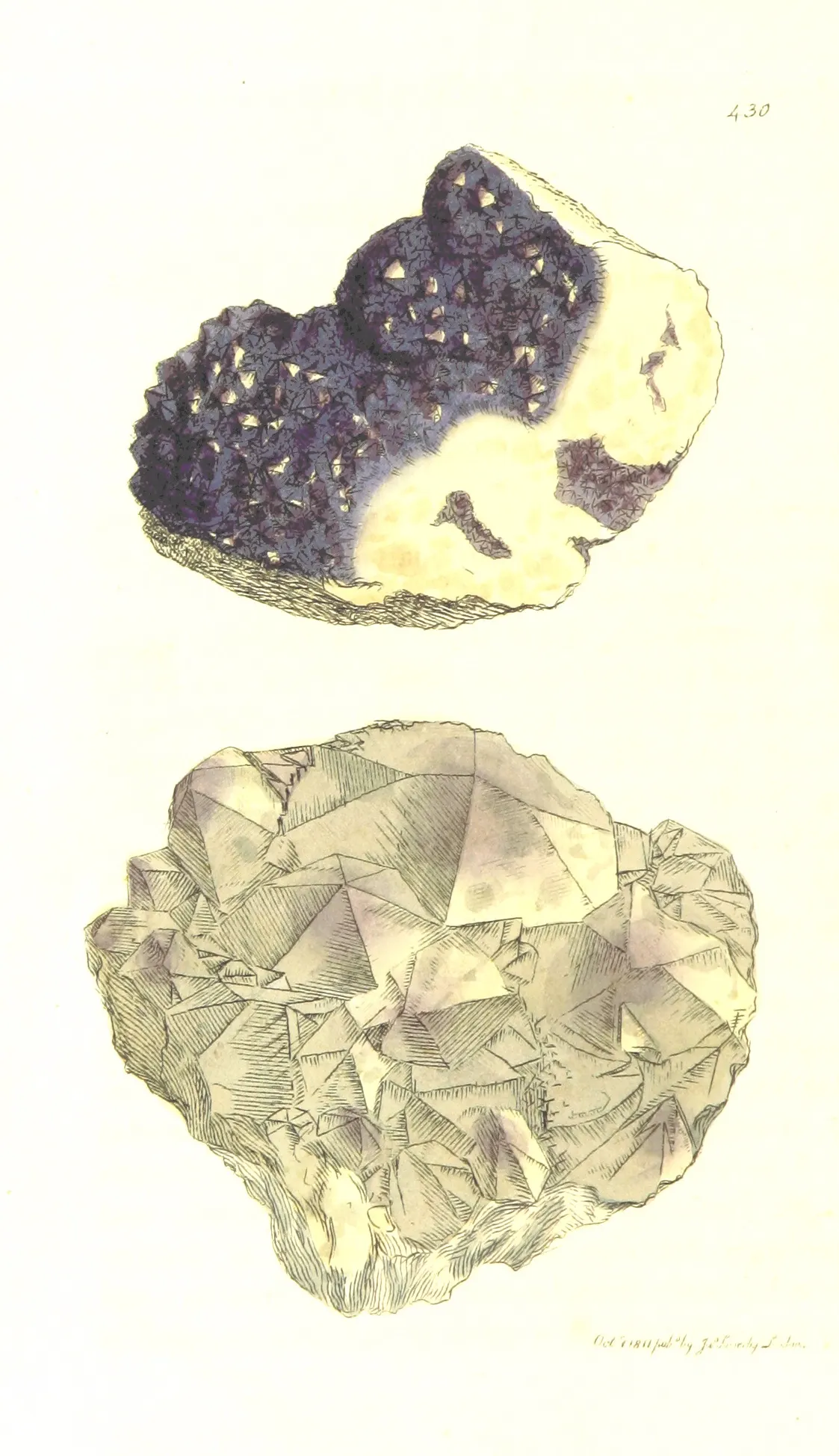
Amethyst has been February's stone since the list was drawn up in 1912, and nothing has been added since. It is quartz, coloured violet by traces of iron that natural radiation from the surrounding rock has turned into a colour centre; without the radiation the iron gives no violet at all. Its Greek name, amethystos, means not drunk, from the old belief that it kept the wearer sober. Heat undoes the colour: above about 440 °C amethyst turns yellow, and most of the citrine sold today began as amethyst, so February's stone and one of November's are, underneath, the same mineral. Large deposits in Brazil, Uruguay and Zambia keep it among the most affordable of the birthstones.
| Stone | 1912 list | Today's list | Change |
|---|---|---|---|
| Amethyst | Birth-stone | Yes | — |
The 1912 list is the one the National Association of Jewelers adopted at Kansas City that August, as G. F. Kunz printed it in The Curious Lore of Precious Stones (1913), with a birth-stone for each month and an alternate for some; today's list is the one GIA publishes. The two lists compared →
February's birth flowers
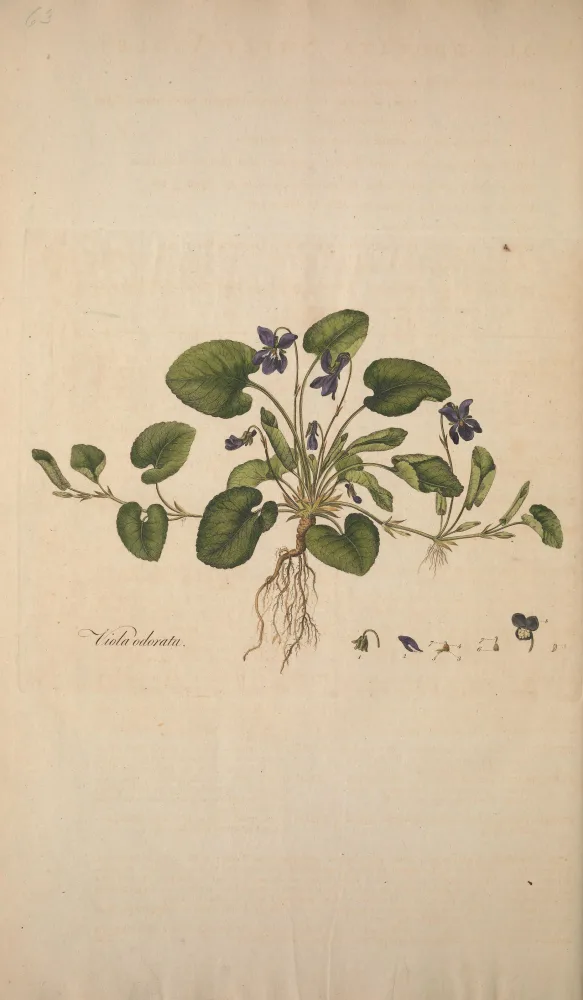
The violet and the primrose are both small flowers of the European woodland and hedge bank, and both reach February only by being early. The violet gave its name to the colour, not the other way round: English had the flower by about 1300 and the colour word later in the same century. Its scent seems to come and go because the ionones in it briefly numb the very receptors that smell them. The primrose is the prima rosa, the first rose of the year, and it was in the primrose that Charles Darwin described the two forms of flower, pin and thrum, that oblige insects to carry pollen from one plant to another.
| Flower | Usually given today | In a nineteenth-century dictionary |
|---|---|---|
| Violet | Faithfulness | “Modesty”Kate Greenaway, Language of Flowers, 1884, under “Violet, Sweet” |
| Primrose | Young love | “Early youth”Kate Greenaway, Language of Flowers, 1884 |
The meanings usually given today are a summary of the birth-flower lists printed now. The older ones are quoted from the dictionary named, under the heading it prints them. Birth flowers and the language of flowers →
Dates to know in February
Valentine's Day on the 14th is named after a Roman martyr about whom almost nothing reliable is known; the romantic custom was attached to the day much later, and first appears in the poetry of fourteenth-century England and France, in Chaucer among others. Candlemas falls on the 2nd, forty days after Christmas. Waitangi Day, New Zealand's national day, is the 6th, for the treaty signed on that day in 1840. The 29th is the one birthday with a date of its own only in a leap year, and not even in every fourth year: 1900 was not a leap year and 2100 will not be.
Which weekday it falls on
The 1st of February is a Sunday in 2026, a Monday in 2027 and a Tuesday in 2028, then jumps two days to a Thursday in 2029, because 29 February 2028 comes between: a date moves on one day of the week a year, and two across a leap day.
In a common year February starts on the same day of the week as March and November, and in a leap year as August. Between 1920 and 2026 the 13th of February fell on a Friday in 16 years, most recently in 2026, and it next does in 2032.
February, day by day
| Date | Born on the day |
|---|---|
| 1 February |
|
| 2 February |
|
| 3 February |
|
| 4 February |
|
| 5 February |
|
| 6 February |
|
| 7 February |
|
| 8 February |
|
| 9 February |
|
| 10 February |
|
| 11 February |
|
| 12 February |
|
| 13 February |
|
| 14 February |
|
| 15 February |
|
| 16 February |
|
| 17 February |
|
| 18 FebruaryAquarius or Pisces |
|
| 19 FebruaryAquarius or Pisces |
|
| 20 February |
|
| 21 February |
|
| 22 February |
|
| 23 February |
|
| 24 February |
|
| 25 February |
|
| 26 February |
|
| 27 February |
|
| 28 February |
|
| 29 February |
|
Three people for each date, from English Wikipedia's list of births for the day, chosen by how many Wikipedia and other Wikimedia projects have a page about them; each date's page lists more. Names are the titles of the English Wikipedia articles; years and descriptions are from Wikidata (CC0), checked and corrected by hand where they needed it. Ask for a removal.