The month
Born in January
Written . By the BirthAlmanac team.
- Star signs
- Capricorn, then AquariusThe sun moves into Aquarius on the 19th, 20th or 21st.
- Birthstone
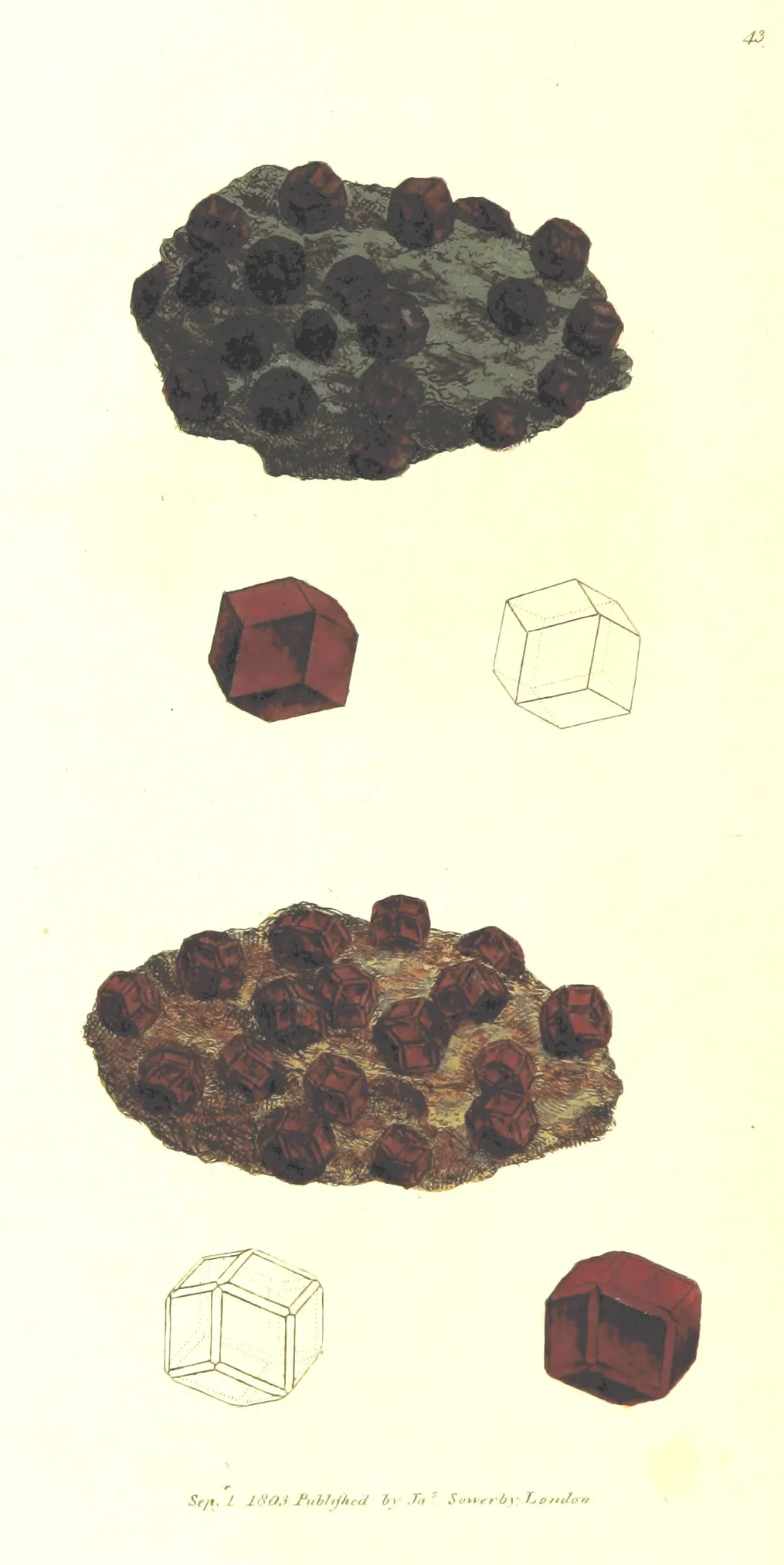
- GarnetThe same as on the 1912 list.
- Birth flowers
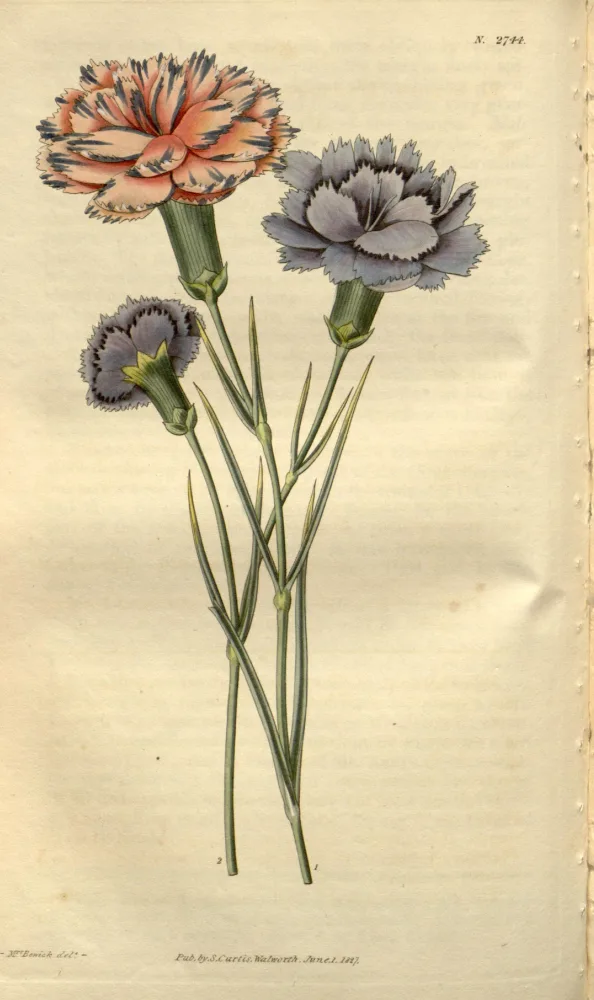
- Carnation and snowdropThe carnation for devotion, the snowdrop for hope, as usually given today.
- Days
- 31Days 1 to 31 of every year.
Where the name comes from
January takes its name from Janus, the Roman god of doorways and beginnings, who was shown with two faces, one looking back and one looking forward. It became the first month of the Roman civil year in 153 BC, when the consuls began taking office on the first of January. That did not settle the matter for the next two thousand years. Across medieval Europe the year was counted from Christmas, from Lady Day on 25 March or from Easter, depending on the place and the century; Scotland moved to 1 January in 1600, and England, Wales, Ireland and the British colonies kept 25 March as the legal start of the year until 1752. January now opens the civil year almost everywhere, although many calendars keep a new year of their own beside it.
The season, north and south
A January birthday is a midwinter one in the north, where the days have been at their shortest around the December solstice and lengthen slowly through the month, and a midsummer one in the south. In South Africa it is the end of the long December break, and schools reopen in the middle of the month; in Australia the summer school holidays run on to late January or the start of February, depending on the state. The same date is a coat-and-candles birthday in Edinburgh and a beach one in Durban.
The star signs of January
A January birthday begins as Capricorn. Between 1920 and 2026 the sun moved into Aquarius on the 19th of January in 6 years (the first in 2005), the 20th in 86 and the 21st in 15 (the last in 1964), in universal time. A birthday on 19 January, 20 January or 21 January is therefore Capricorn or Aquarius depending on the year, and in the year of a crossing on the hour; the page for each of those dates gives the sign and the moment of the crossing for every year.
Every other date in January had one sign all day in every one of those years: Capricorn up to the 18th and Aquarius from the 22nd.
In the astrological tradition Capricorn is an earth sign and a cardinal one, ruled by Saturn. Printed tables give it as 22 December – 19 January; between 1920 and 2026 the sun entered it on the 21st or 22nd of December and left it on the 19th, 20th or 21st of January.
In the astrological tradition Aquarius is an air sign and a fixed one, ruled by Saturn, and by Uranus in modern astrology. Printed tables give it as 20 January – 18 February; between 1920 and 2026 the sun entered it on the 19th, 20th or 21st of January and left it on the 18th or 19th of February.
January's birthstone
January is one of the months nobody has touched: garnet was its stone on the list drawn up in 1912, and it is its stone now. The name is usually traced through Medieval Latin granatum to the pomegranate, whose seeds the red stones resemble. Garnet is a family of related minerals rather than a single one, and it comes green, orange and even colour-changing as well as in the deep red most people picture. In that red, the almandine and pyrope garnets, the iron that gives the colour is part of the mineral itself rather than a trace impurity.
| Stone | 1912 list | Today's list | Change |
|---|---|---|---|
| Garnet | Birth-stone | Yes | — |
The 1912 list is the one the National Association of Jewelers adopted at Kansas City that August, as G. F. Kunz printed it in The Curious Lore of Precious Stones (1913), with a birth-stone for each month and an alternate for some; today's list is the one GIA publishes. The two lists compared →
January's birth flowers
The carnation and the snowdrop make an odd pair for one month. The carnation is a Balkan plant that flowers in early summer in a garden, and it belongs to January by way of the florist, who sells it all year and in almost every colour except a true blue: the genus lacks the gene for the blue pigment, and the violet carnations sold since the 1990s were given it by genetic modification. The snowdrop is the January flower of the woods, one of the first to open in the northern year. English sees a drop of snow in it, and the botanist's name, Galanthus, sees milk, from the Greek gala.
| Flower | Usually given today | In a nineteenth-century dictionary |
|---|---|---|
| Carnation | Devotion | “Woman's love”Kate Greenaway, Language of Flowers, 1884, under “Pink, Carnation” |
| Snowdrop | Hope | “Hope”Kate Greenaway, Language of Flowers, 1884 |
The meanings usually given today are a summary of the birth-flower lists printed now. The older ones are quoted from the dictionary named, under the heading it prints them. Birth flowers and the language of flowers →
Dates to know in January
New Year's Day on the 1st is a public holiday almost everywhere that uses the Gregorian calendar. Epiphany falls on the 6th in the Western churches, while the Orthodox churches that keep the Julian calendar celebrate Christmas on the 7th, which is 25 December in their reckoning. Burns Night, on the 25th, marks the birthday of the Scottish poet Robert Burns, born in 1759, and Australia Day falls on the 26th. The Chinese new year always falls between 21 January and 20 February, so in some years it arrives in the last days of the month and a January birthday belongs to the animal of the year before.
Which weekday it falls on
The 1st of January is a Thursday in 2026, a Friday in 2027 and a Saturday in 2028, then jumps two days to a Monday in 2029, because 29 February 2028 comes between: a date moves on one day of the week a year, and two across a leap day.
In a common year January starts on the same day of the week as October, and in a leap year as April and July. Between 1920 and 2026 the 13th of January fell on a Friday in 16 years, most recently in 2023, and it next does in 2034.
January, day by day
| Date | Born on the day |
|---|---|
| 1 January |
|
| 2 January |
|
| 3 January |
|
| 4 January |
|
| 5 January |
|
| 6 January |
|
| 7 January |
|
| 8 January |
|
| 9 January |
|
| 10 January |
|
| 11 January |
|
| 12 January |
|
| 13 January |
|
| 14 January |
|
| 15 January |
|
| 16 January |
|
| 17 January |
|
| 18 January |
|
| 19 JanuaryCapricorn or Aquarius |
|
| 20 JanuaryCapricorn or Aquarius |
|
| 21 JanuaryCapricorn or Aquarius |
|
| 22 January |
|
| 23 January |
|
| 24 January |
|
| 25 January |
|
| 26 January |
|
| 27 January |
|
| 28 January |
|
| 29 January |
|
| 30 January |
|
| 31 January |
|
Three people for each date, from English Wikipedia's list of births for the day, chosen by how many Wikipedia and other Wikimedia projects have a page about them; each date's page lists more. Names are the titles of the English Wikipedia articles; years and descriptions are from Wikidata (CC0), checked and corrected by hand where they needed it. Ask for a removal.